Off-Season Outdoor Gear Storage Tips for the PNW
Washington’s outdoor seasons are short and sweet, and what you do with your gear between adventures determines if it’s ready to perform when the trails dry out and the water warms up. The Pacific Northwest’s wet, freezing winters are uniquely punishing on equipment, and a little preparation now saves you from costly problems come spring.
If you’re storing a kayak after a final paddle on Puget Sound or hanging up a mountain bike until the mud settles, these tips on Pacific Northwest vehicle and gear storage will help you secure your investment and hit the ground running next season.
Why the PNW Off-Season Is Hard on Outdoor Gear
Washington winters are a cycle of freezing, thawing, and freezing again. That pattern is especially harsh because water trapped in small crevices expands when it freezes, putting direct stress on seams, valves, and joints. Left unchecked, this turns a hairline crack in a kayak hull or a loose valve on an inflatable paddleboard into a full-blown repair bill.
Temperature swings cause rubber seals to fail, metal components to corrode, and foam padding to break down faster than in drier climates. A quick inspection for cracks, loose fittings, and worn straps before storage is the simplest way to avoid discovering damage right before your next big trip.
How to Prepare Each Type of Gear for Storage

Proper preparation is the foundation of effective seasonal equipment storage. Each gear type has its own vulnerabilities, so a one-size-fits-all approach won’t cut it.
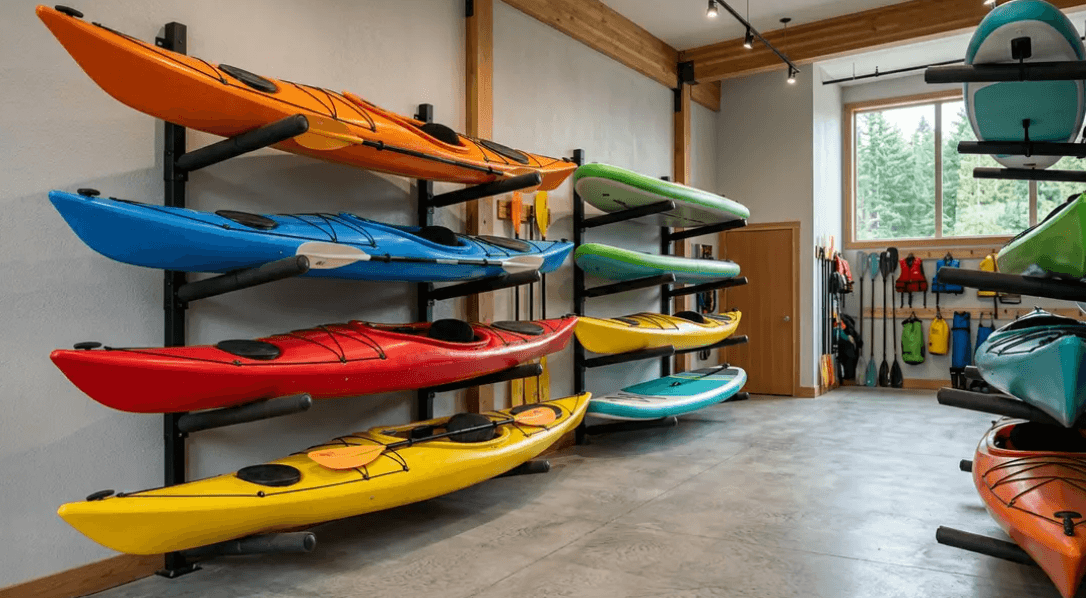
- Kayaks and paddleboards. Rinse thoroughly with fresh water after every use near salt or brackish water, dry the hull and cockpit completely, then store upright or on padded wall mounts to reduce hull deformation. For inflatable paddleboards, leave 10–15% of air in the board rather than fully deflating. This keeps seams in shape and can help the material from creasing over months of paddleboard off-season storage.
- Bikes. Degrease the chain, lubricate all moving parts, and release tire pressure slightly to reduce stress on tubes during long storage. Hanging bikes vertically saves floor space and keeps frames off surfaces where condensation can collect.
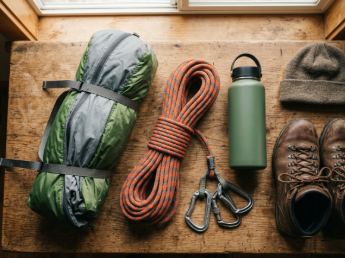
- Camping equipment. Storing a tent even slightly damp invites mold and material breakdown. Remove batteries from lanterns, headlamps, and GPS devices to reduce corrosion from leaking cells.
- Ski and snowboard gear. Clean and dry boots, poles, helmets, and outerwear thoroughly. Stuff boots with newspaper to hold their shape, and hang jackets rather than compressing them in bins, which flattens insulation over time.
For a deeper dive into caring for your hiking equipment year-round, check out our guide on how to properly store your hiking gear.
When Your Garage Isn’t Enough: Choosing a Storage Unit
A cramped garage often means gear gets stacked, knocked over, or left in conditions that accelerate wear. A dedicated unit gives each item the room and environment it needs, and for serious outdoor enthusiasts, that distinction matters.
A climate-controlled environment maintains a consistent range year-round, which shields carbon fiber bike frames, inflatable kayak bladders, and electronics-integrated equipment from the thermal stress that causes premature breakdown. You can learn more about how these options differ on our heated vs. climate-controlled storage comparison.
Unit size matters, too. A 5×10 unit works well for bikes and camping gear, while a 10×10 or 10×20 gives you the room needed to store a full kayak or multiple paddleboards alongside other seasonal equipment. If you’re unsure what fits where, our storage unit size guide breaks it down clearly.
Drive-aisle access makes loading and unloading bulky items, like roof-mounted kayak carriers, canoes, or large camping gear, far easier than navigating a narrow residential driveway. Look for facilities with access hours that align with your recreation schedule. Early morning availability is a genuine game-changer when you want to grab your paddleboard for a sunrise session on the Columbia River.
For those in the greater Tacoma and Puyallup areas, recreational storage in Tacoma puts your gear close to the water and trails you love most.
Build Smart Habits That Protect Your Gear All Winter
A simple winterization checklist keeps each gear category organized, labels bins, photographs how items were packed, and notes repairs needed, so you’re ready the moment the season opens. Inside your storage unit, use wall-mounted racks, ceiling hoists, and stackable bins to maximize vertical space, keeping an aisle clear for easy access.
Give your gear the winter it deserves and find the right unit size and reserve a storage unit near you today.