How To Organize a Storage Unit So You Can Actually Find Everything
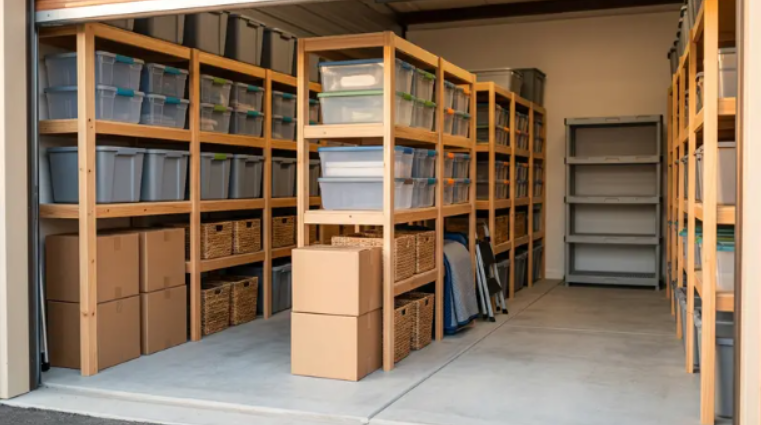
Renting a unit and filling it as fast as possible is how most people end up digging through stacked boxes six months later, unable to find the one thing they came for. A little planning before the first box goes in makes the difference between a unit you can actually use and one you dread opening. Here is a practical approach to organizing a storage unit so it works for you every time you visit.
Start With a Floor Plan Before You Load
Sketch a rough layout before anything goes in. Place items you will need to reach regularly near the front, and push seasonal or long-term items toward the back. Leave a center aisle wide enough to walk through comfortably. This one step prevents the most common mistake: stacking everything in the order it arrives and then having no path to the back half of the unit.
If you are unsure how much space you actually need for your belongings, checking our storage unit size guide before you rent can save you from paying for a unit that is too large or cramming everything into one that is too small.
Label Every Box on Multiple Sides
A label on the top of a box is useless once it is stacked. Write the contents on at least two sides and the top. Be specific: “Kitchen – mixing bowls, baking sheets” tells you far more than “Kitchen misc.” A color-coded tape system by room of your home adds another layer of visibility at a glance, especially useful when boxes are stacked floor to ceiling.
Stack Strategically and Use Vertical Space
Heavy, sturdy boxes go on the bottom. Lighter, fragile items go on top. Uniform box sizes stack far more cleanly than mismatched ones, so it is worth using standard sizes when you pack. Freestanding wire shelving units are worth the investment for a long-term rental. They keep boxes off the floor, improve airflow around your belongings, and make it possible to see everything without moving anything.
Furniture can double as storage. Dresser drawers, filing cabinets, and wardrobes can hold folded clothing, linens, or documents while taking up the same floor space they would anyway. Stack flat items like picture frames vertically rather than horizontally to reduce the footprint and prevent pressure damage.
Group Items by Category, Not by Move Date
Grouping by when something was packed leads to a chaotic unit. Instead, keep like items together: all outdoor gear in one zone, all holiday decor in another, all furniture pieces in a third. If you store gear for multiple activities, for example skiing equipment alongside camping supplies, this approach means you only need to go to one corner of the unit for each season’s swap. Our storage tips page has additional guidance on packing and protecting specific item types.
Keep a Running Inventory
A simple spreadsheet or notes app on your phone listing what is in each numbered box takes about ten minutes to set up and saves hours of searching later. Number your boxes, log the contents, and update the list when you add or remove items. This is especially useful for small business storage, where rotating inventory or equipment makes it easy to lose track of what is on hand.
Think About Temperature-Sensitive Items Separately
Wood furniture, electronics, and musical instruments can all be affected by temperature swings over time. If your unit holds any of these, a temperature-regulated environment is worth considering. Glacier West offers climate-controlled storage at several locations, which maintains a consistent temperature range year round and reduces the risk of warping, cracking, or finish damage on sensitive items.
Getting organized from the start pays off every time you return to the unit. If you are still deciding on a location or unit size, browse Glacier West storage locations across Washington and Idaho to find the facility that fits your situation. A well-organized unit is only as useful as one that is actually convenient to reach.