Winterizing Your Jet Ski or PWC for Storage
Every fall, Pacific Northwest riders face the same question: how to winterize a Jet Ski before the water gets too cold to bother. The answer matters more than most people expect. Skipping even one step can mean cracked engine components, a corroded exhaust, or a fuel system that won’t cooperate come spring. Glacier West self storage walks through the process in order, so nothing gets missed.
Flush the Cooling System First
Before anything else, flush the cooling system with fresh water. Most Jet Ski and Sea-Doo models have a garden hose flush port on the hull. Connect the hose, start the engine, and let it run for two to three minutes. This clears out lake water, salt residue, and any debris that found its way into the cooling passages. Skipping this step is one of the most common reasons engines develop corrosion over a long offseason.
Add Fuel Stabilizer and Run the Engine
Ethanol-blended fuel starts breaking down in as little as 30 days. Add a marine-grade fuel stabilizer to a full tank, then run the engine long enough to circulate the treated fuel through the entire fuel system, including the carburetors or fuel injectors. A full tank also reduces the amount of air space inside, which helps limit condensation buildup over winter.
Drain Every Last Drop of Water
Any water left inside the hull, exhaust, or bilge can freeze and crack components when temperatures drop. Tilt the craft nose-up on the trailer to drain the bilge completely. Remove the drain plug and leave it out during storage so any residual water can escape. Check the exhaust outlet as well, as water trapped there can back up into the engine if the craft sits level for months.
Battery, Lubrication, and a Final Inspection
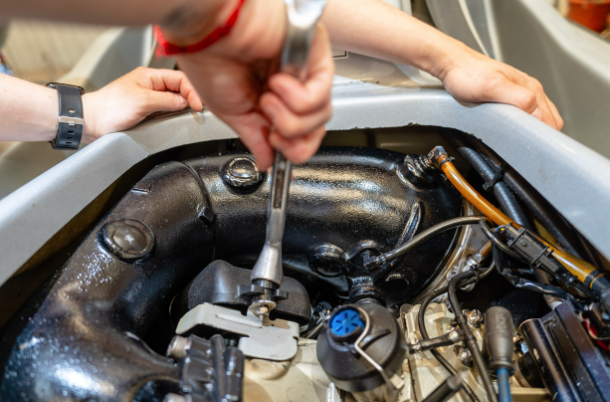
Disconnect the battery and store it somewhere it won’t freeze. A trickle charger or battery tender keeps it at a healthy charge level through the offseason without overcharging. While you have access to the engine compartment, spray exposed metal fittings and cable ends with a corrosion inhibitor. Check the impeller and wear ring for nicks or damage; it’s far easier to order parts now than to discover a problem the morning you want to launch in April.
Cover the craft with a fitted, breathable cover rather than a tarp. If you’re storing the Jet Ski outdoors, that cover does a lot of work. If you have the option of a covered or indoor unit, the craft will come out of storage in noticeably better condition. Our vehicle storage options are built for exactly this kind of offseason situation.
Choosing the Right Storage Space
A standard Jet Ski on its trailer typically fits in a 10×20 unit, though a larger personal watercraft or a trailer with a wider beam may need more room. Use our storage unit size guide to match your craft’s dimensions to the right unit before you book. For riders near the water in Chelan, Gig Harbor, or Poulsbo, Glacier West storage locations across Washington are positioned close to the launches you use most.
A properly winterized Jet Ski or Sea-Doo should start up in spring with minimal fuss. The hour or two you spend on this process now is the difference between launching on the first warm weekend and spending that weekend troubleshooting a fuel system that sat with stale gas all winter.