RV and Boat Storage 101: What Washington Owners Need To Know Before Winter
It’s the end of last weekend of boating season, the trailer is back in the driveway, and the HOA notice arrives just a few days later. For a lot of Washington owners, that’s the moment that a winter plan for boat storage stops being optional. Whether you’re on the west side of the Cascades dealing with wet winters or east of the mountains watching temperatures drop fast, getting your rig into vehicle storage before the season closes makes the spring launch a lot simpler.
Why the Driveway Stops Working in Winter
HOA restrictions are one reason, but not the only one. A boat and trailer sitting uncovered through a Pacific Northwest winter collects standing water, debris, and UV exposure from the occasional clear day. Tarps shift, pool, and tear. An RV parked on a residential street for months can draw code enforcement attention in many Washington municipalities.
A dedicated RV or boat storage spot with Glacier West Self Storage solves the problem cleanly. The rig is off your property, out of the weather to whatever degree the space allows, and ready to retrieve when the season opens back up.
Outdoor vs. Covered Storage: Knowing the Difference
Outdoor storage is the most common and budget-friendly option. Your boat or RV sits in a secured lot, typically on a paved or gravel surface. It keeps the rig off your driveway and out of the neighborhood, but it’s still exposed to the elements. For owners who already winterize thoroughly, outdoor storage is often all they need.
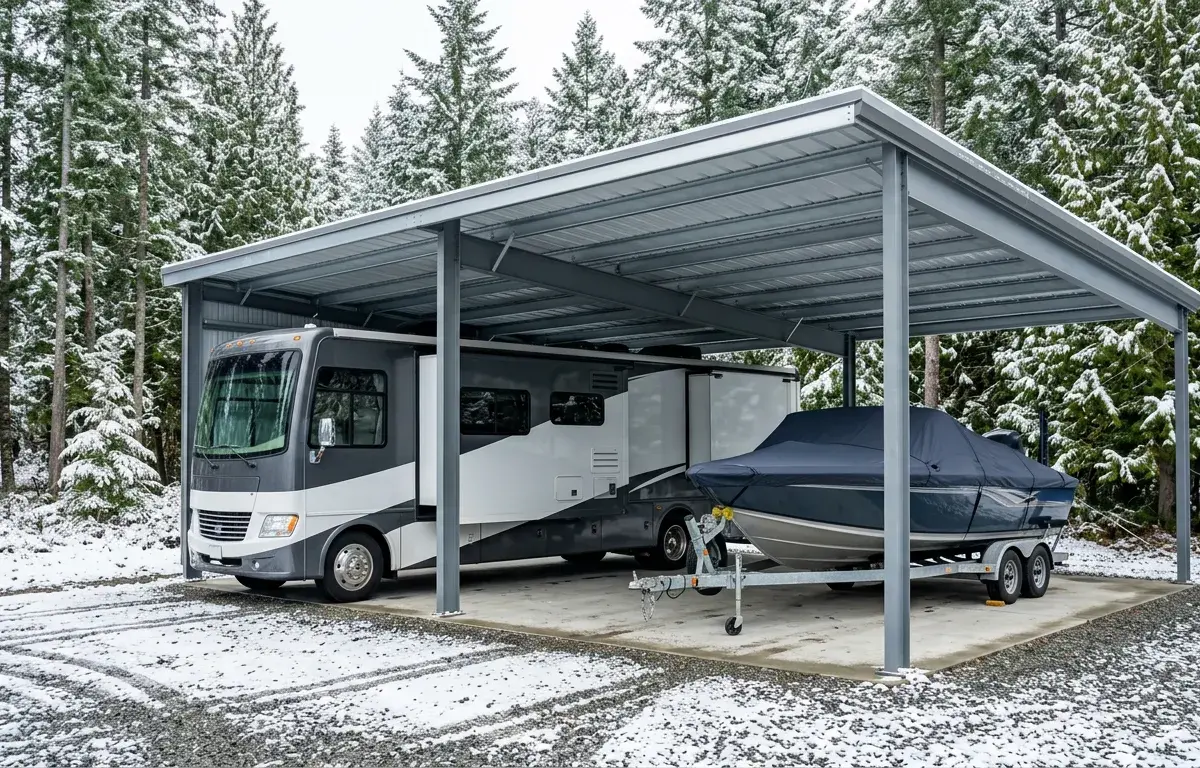
Covered storage adds a roof overhead, which cuts down on direct rain and sun exposure without the cost of a fully enclosed space. For Washington’s wet winters, that overhead cover makes a difference for canvas covers, upholstery, and exterior finishes over a four-to-five month offseason.
If you’re newer to the process, our guide to winterizing a camper walks through the prep steps before you drop your rig off at a facility.
Getting the Size Right
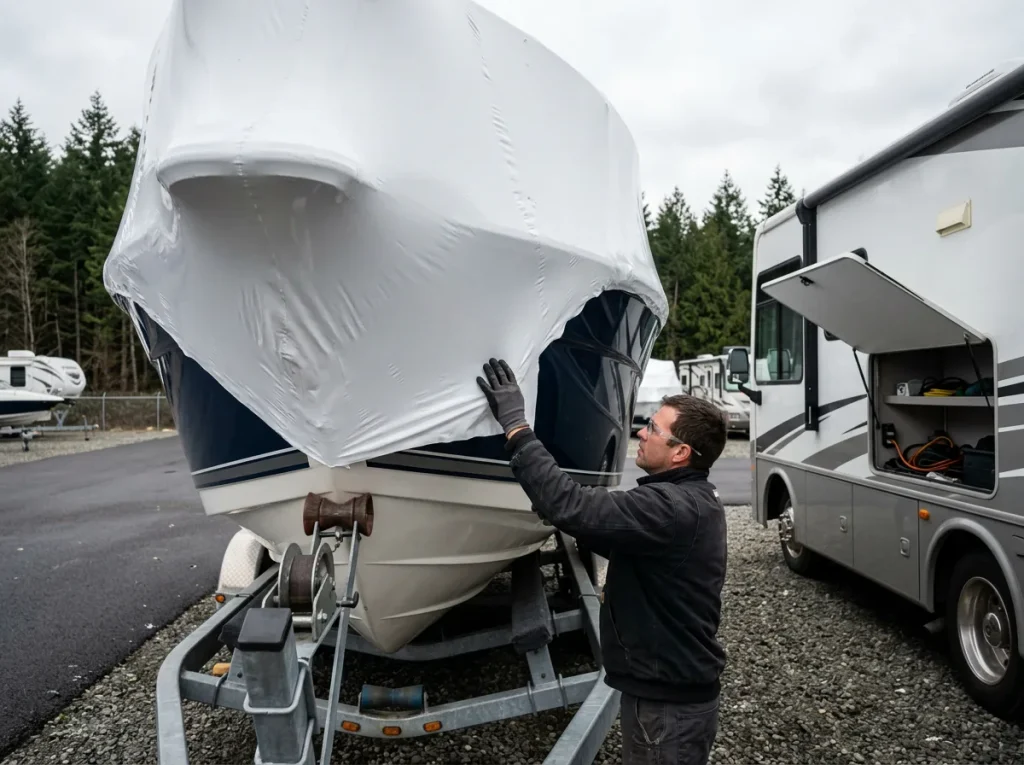
Space sizing is where a lot of owners get tripped up. A personal watercraft on a trailer fits in a much shorter space than a pontoon boat, and a Class A motorhome needs significantly more length than a pop-up camper. At Glacier West Self Storage, vehicle units run up to 12×54, which covers most boats, trailers, and large RVs. The key is measuring your rig with the trailer attached before you reserve anything.
Our storage size guide gives a practical breakdown to help you match your rig to the right space before you commit.
Access When It Counts: Hitching, Towing, and Maneuvering
Retrieval ease matters just as much as drop-off. A facility with wide drive lanes and pull-through access makes hitching up a trailer far less frustrating than a tight lot where you’re backing into a corner. When you’re evaluating a storage location, ask specifically about lane width and whether the space allows you to pull forward out rather than back out with a loaded trailer.
Glacier West locations in Washington are designed with larger vehicles in mind. You can explore our storage options across Washington to find a facility close to your home or launch site.
For lake and coastal communities in particular, proximity to the water matters at both ends of the season. Storing near your regular launch point means less towing time when the lake opens back up in the spring. See our guide on boat and RV storage near Lake Chelan to learn what that looks like for one of Washington’s most popular boating destinations.
Getting your boat or RV into winter storage mode before the wet season takes about an afternoon of prep and one good decision on where to park it. Do that once, and the spring launch becomes the easy part.